- 020 3778 0973
- 078 1790 1473
- info@thestanlee.com
- Mon - Fri: 09:30 - 17:30

Capital allowances can play an important role in reducing the taxable profits of UK property businesses, but the rules can be complex. Property investors need to understand which parts of a property purchase, construction project or refurbishment may qualify for tax relief and which costs cannot be claimed.
For investors buying commercial property, developing business premises or operating certain types of property businesses, identifying eligible expenditure can make a significant difference to the overall tax position. However, residential property investors should be particularly careful because different restrictions apply to properties used as dwelling houses.
In this guide, we explain capital allowances and property tax in the UK, including plant and machinery allowances, fixtures, Structures and Buildings Allowance, residential property restrictions and important considerations when buying or selling an investment property.
Important: Tax rules can change and the treatment of individual expenditure depends on the circumstances. This article provides general information and should not replace professional tax advice.
Capital allowances are a form of tax relief that allows businesses to obtain tax deductions for certain types of capital expenditure.
Unlike ordinary business expenses, capital expenditure generally relates to assets or investments that provide benefits over a longer period. Instead of simply deducting the cost as a normal business expense, qualifying expenditure may be relieved through the capital allowances system.
HMRC describes plant and machinery as items kept for use in a business. Certain integral features and fixtures can also qualify.
For property investors, this means that the purchase or development of a property should not necessarily be treated as one single cost. Different components may have different tax treatments.
The exact treatment depends on the type of property, how it is used and the nature of the expenditure.
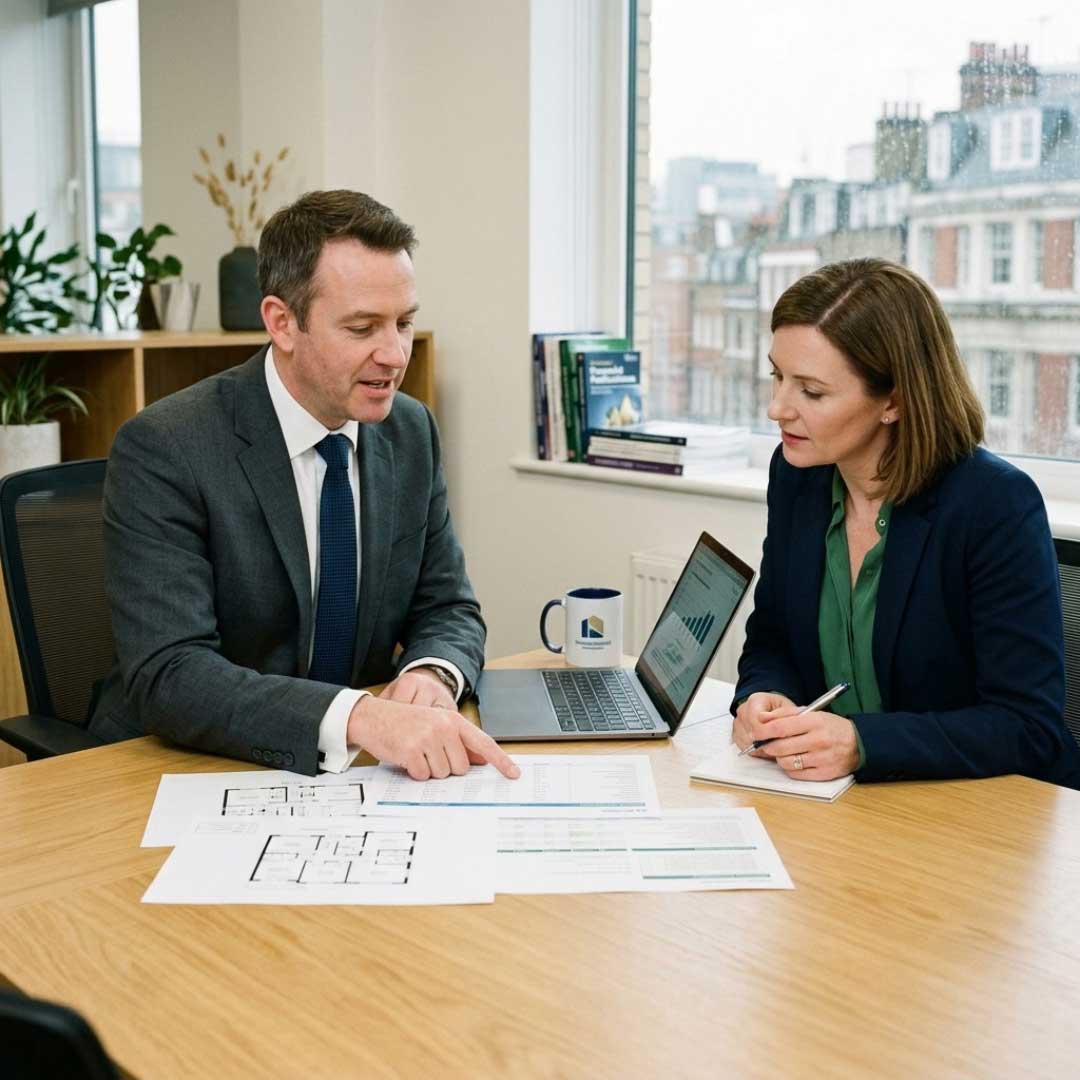
A common misconception is that an investor can claim capital allowances on the entire purchase price of a property.
Generally, the cost of land and the building itself does not qualify for plant and machinery allowances. However, certain fixtures, integral features and other qualifying expenditure may be eligible for relief.
For example, if a business purchases a commercial property, the purchase price may include expenditure attributable to qualifying fixtures such as electrical systems, heating systems or other integral features.
This is why property investors should consider capital allowances before completing a property acquisition, rather than treating them as an afterthought.
The availability of capital allowances depends heavily on the type of property and its use.
Plant and machinery allowances may be available for qualifying assets used within a business.
Examples can include:
The rate at which relief is obtained depends on the type of expenditure and the relevant capital allowance pool.
From April 2026, the main writing-down allowance rate is 14%, while the special rate pool remains 6%. The Annual Investment Allowance (AIA) remains at £1 million, subject to the relevant rules.
Fixtures can be particularly important when purchasing an existing commercial property.
For example, qualifying fixtures may include:
HMRC states that when a property containing fixtures is purchased from another business, there are specific requirements for the buyer to claim capital allowances. The previous owner generally needs to have pooled the relevant expenditure, and the parties need to agree the value attributable to the fixtures.
This is why capital allowances should be considered during the property purchase process, particularly when acquiring commercial buildings.
Another important relief for property investors is the Structures and Buildings Allowance (SBA).
The SBA can provide tax relief on qualifying expenditure relating to the construction of certain new non-residential structures and buildings, as well as certain renovation or conversion expenditure.
The standard rate is currently 3% per year, generally providing relief on a straight-line basis over 33⅓ years.
SBA may be relevant to:
There are detailed conditions governing qualifying expenditure and use of the building.
Importantly, the building’s first use must be non-residential for SBA purposes. If a building is first used as a residence, the relevant expenditure does not qualify for SBA.
Residential property requires particular care.
Generally, plant and machinery allowances are not available for items used inside an ordinary dwelling house as part of a property business.
However, there are specific exceptions. For example, HMRC states that allowances may be available for certain items used in communal areas of a building containing multiple residential units, such as a lift or furniture in a communal entrance area.
Therefore, a landlord of a block of flats may have a different capital allowances position from an investor who owns a single residential house.
Property investors should not assume that all property-related expenditure receives the same tax treatment.
If you are purchasing a commercial property, capital allowances should ideally be considered before the transaction completes.
The purchase price of a property may include qualifying fixtures and other expenditure that could potentially attract tax relief.
A typical process may involve:
Step 1: Review the property
Identify the type of property and how it will be used.
Step 2: Review the purchase documents
Examine the contract, valuation and available information concerning fixtures and other assets.
Step 3: Identify qualifying expenditure
Separate land, buildings, fixtures, plant and machinery and other relevant expenditure.
Step 4: Review previous claims
Where appropriate, establish whether the previous owner claimed capital allowances.
Step 5: Agree the relevant value
Where required, the buyer and seller may need to agree the value attributable to fixtures, potentially through a Section 198 election.
Step 6: Prepare the tax claim
The qualifying expenditure can then be considered when preparing the relevant tax computations.
This process can help prevent potentially valuable tax relief from being overlooked.
Property developers and businesses constructing or substantially converting commercial premises should also consider capital allowances from the beginning of the project.
Construction costs can contain different categories of expenditure, and some may qualify for different forms of relief.
For qualifying non-residential structures, the SBA may provide relief at 3% per year, subject to the relevant conditions. Certain expenditure in designated special tax sites may qualify for enhanced rates.
Professional advice at the planning stage can help investors maintain the appropriate records and supporting documentation throughout the project.
Capital allowances claims depend on accurate records and appropriate evidence.
Property investors should retain relevant documentation such as:
Good record-keeping can make it easier to establish which expenditure qualifies and support the claim if HMRC asks for further information.
Property investors can make several mistakes when dealing with capital allowances.
Treating the whole property as one asset
A property purchase can contain several different categories of expenditure, each with different tax treatment.
Assuming residential property qualifies in the same way as commercial property
The rules for ordinary residential property are significantly different from those applying to many commercial properties.
Ignoring fixtures during a purchase
Qualifying fixtures may be overlooked when negotiating or completing a commercial property transaction.
Waiting until after completion
Some capital allowances issues are easier to address before the transaction is completed.
Poor documentation
Without appropriate evidence, it may be difficult to establish the nature and value of qualifying expenditure.
Assuming every refurbishment cost qualifies
Not every building or refurbishment cost qualifies for capital allowances. Each item needs to be considered under the relevant rules.
Capital allowances should form part of the wider tax planning process rather than being considered in isolation.
For example, investors considering two commercial properties may need to look beyond:
They may also need to consider the potential tax treatment of capital expenditure, fixtures, building works and future disposals.
This does not mean capital allowances should determine an investment decision on their own. Instead, they are one part of understanding the overall tax position of a property investment.
Final Thoughts
Capital allowances can be an important part of tax planning for UK property investors, particularly those investing in commercial buildings, business premises or development projects.
However, the rules are not the same for every property. The distinction between residential and commercial property, the treatment of fixtures and integral features, the Structures and Buildings Allowance and the changes to Furnished Holiday Lettings can all affect the tax position.
If you are buying, selling, developing or refurbishing UK property, it is worth reviewing the potential capital allowances before making major financial decisions.
Stan Lee Accountancy Ltd provides professional accounting and tax support for individuals, landlords, property investors and businesses. Our team can help you understand the tax implications of your property investment and identify relevant areas for professional tax planning.
Need advice about your property tax position? Contact Stan Lee Accountancy Ltd for professional guidance tailored to your circumstances.
Capital allowances are tax reliefs that can allow businesses to deduct qualifying capital expenditure from taxable profits. For property businesses, qualifying expenditure may include certain fixtures, integral features, plant and machinery and, in appropriate cases, qualifying non-residential construction expenditure.
It depends on the type of property and how it is used. Ordinary residential landlords face restrictions on plant and machinery used within dwelling houses, although certain communal areas of multi-unit residential buildings may qualify. Commercial property can provide more opportunities for capital allowances.
Potentially, yes. Certain fixtures and integral features within a commercial property may qualify. However, specific rules apply when a property containing fixtures is acquired from another owner, including requirements concerning previous claims and the agreement of the relevant value.
Generally, plant and machinery allowances are restricted for items used within an ordinary dwelling house. There are exceptions, including certain qualifying items used in communal areas of multi-unit residential buildings.
Yes. Capital allowances can interact with property acquisition, development, financing, taxation and future disposal. Reviewing the tax position before completing a transaction can help identify relevant reliefs and avoid preventable issues.
| Cookie | Duration | Description |
|---|---|---|
| cookielawinfo-checkbox-analytics | 11 months | This cookie is set by GDPR Cookie Consent plugin. The cookie is used to store the user consent for the cookies in the category "Analytics". |
| cookielawinfo-checkbox-functional | 11 months | The cookie is set by GDPR cookie consent to record the user consent for the cookies in the category "Functional". |
| cookielawinfo-checkbox-necessary | 11 months | This cookie is set by GDPR Cookie Consent plugin. The cookies is used to store the user consent for the cookies in the category "Necessary". |
| cookielawinfo-checkbox-others | 11 months | This cookie is set by GDPR Cookie Consent plugin. The cookie is used to store the user consent for the cookies in the category "Other. |
| cookielawinfo-checkbox-performance | 11 months | This cookie is set by GDPR Cookie Consent plugin. The cookie is used to store the user consent for the cookies in the category "Performance". |
| viewed_cookie_policy | 11 months | The cookie is set by the GDPR Cookie Consent plugin and is used to store whether or not user has consented to the use of cookies. It does not store any personal data. |