- 020 3778 0973
- 078 1790 1473
- info@thestanlee.com
- Mon - Fri: 09:30 - 17:30

Understanding Corporation Tax UK is one of the most important responsibilities for any small business owner operating through a limited company. Whether you are launching a new company, growing an established business, or transitioning from sole trader status, knowing how Corporation Tax works can help you remain compliant, avoid penalties, and manage your finances effectively.
Corporation Tax is a tax charged on the profits made by limited companies and certain organisations in the UK. While the rules can appear complex, having a clear understanding of your obligations can help you make informed decisions and improve your business’s financial health.Buying investment property in the UK can be a profitable long-term financial decision. Whether you are planning to invest in a buy-to-let property, commercial premises, or a second residential property, understanding the tax implications before making the purchase is essential. Many investors focus heavily on rental income, mortgage options, and property location while overlooking one of the most important factors: property taxation.
The UK property tax system is complex and constantly evolving. Without proper planning, investors may face unexpected tax liabilities, compliance problems, or missed opportunities for tax savings. This is why working with a professional property tax advisor before purchasing investment property is highly recommended.
In this guide, the experts at Stan Lee Accountancy Ltd explain how Corporation Tax works, who must pay it, how it is calculated, and the practical steps small business owners can take to remain compliant.
Corporation Tax is a direct tax that UK limited companies pay on their taxable profits. Unlike Income Tax, which applies to individuals, Corporation Tax applies to company profits generated through business activities.
A company’s taxable profits may include:
Every limited company operating in the UK generally has a legal obligation to calculate, report, and pay Corporation Tax on its profits.
Most UK limited companies must register for Corporation Tax when they begin trading.
Businesses that may be required to pay Corporation Tax include:
Sole traders and traditional partnerships do not pay Corporation Tax. Instead, they pay Income Tax on their business profits through the Self Assessment system.
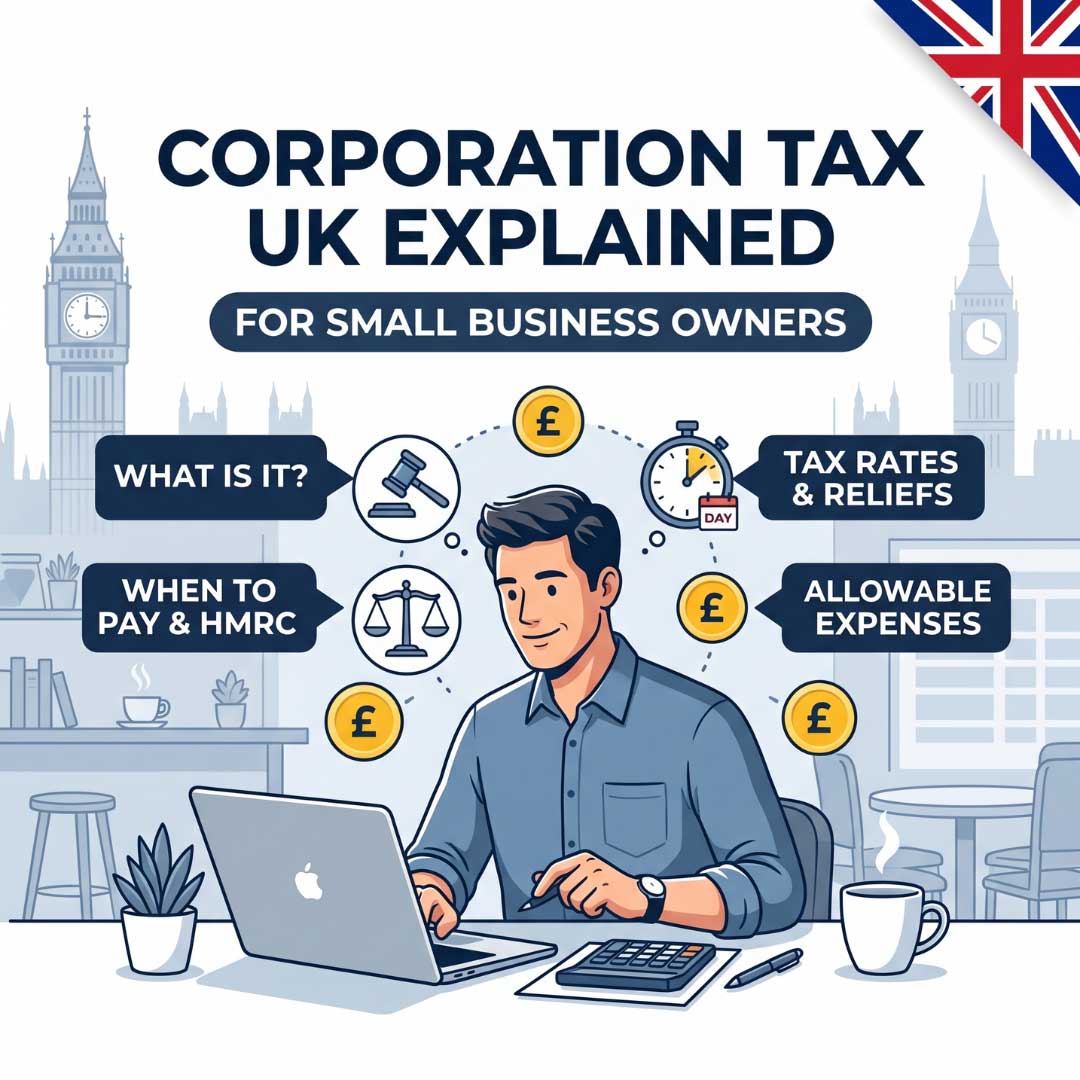
Corporation Tax is calculated based on a company’s taxable profits during its accounting period.
The process generally involves:
Accurate bookkeeping and financial records are essential throughout this process to ensure compliance and minimise errors.
Corporation Tax rates depend on the level of taxable profits generated by a company.
Generally:
The applicable rate can vary depending on the company’s circumstances, associated companies, and legislative changes. Therefore, professional advice is often beneficial when calculating liabilities.
One of the most effective ways to reduce Corporation Tax legally is by claiming all allowable business expenses.
Common allowable expenses include:
Expenses must be wholly and exclusively incurred for business purposes to qualify for tax relief.
Businesses can often reduce their Corporation Tax bill through capital allowances and available reliefs.
Examples include:
Claiming available reliefs correctly can significantly reduce taxable profits and improve cash flow.
When a limited company starts trading, it must register for Corporation Tax with HMRC.
Trading activities may include:
Registration should be completed promptly after trading begins to avoid compliance issues.
Meeting deadlines is crucial to avoid penalties and interest charges.
Key deadlines include:
Corporation Tax is generally due nine months and one day after the end of the accounting period.
The Company Tax Return usually must be submitted within twelve months of the end of the accounting period.
Companies must also submit annual accounts to Companies House within the applicable filing deadline.
Failing to meet these obligations can result in penalties, interest charges, and increased scrutiny from HMRC.
Many small businesses unintentionally pay more tax than necessary or expose themselves to compliance risks.
Common mistakes include:
Working with experienced accountants can help prevent these issues and provide peace of mind.
Effective bookkeeping forms the foundation of accurate Corporation Tax reporting.
Benefits include:
Cloud accounting software combined with professional accountancy support can significantly improve compliance and efficiency.
Corporation Tax legislation can be complex, particularly as your business grows.
A professional accountant can assist with:
Professional guidance often helps businesses identify savings opportunities while ensuring full compliance with UK tax regulations.
Conclusion
Understanding Corporation Tax UK is essential for every small business owner operating through a limited company. While the rules and deadlines can seem complicated, maintaining accurate records, claiming legitimate expenses, and seeking professional advice can make compliance significantly easier.
Effective Corporation Tax planning not only helps businesses meet their legal obligations but can also improve profitability and cash flow. By taking a proactive approach, small business owners can avoid costly mistakes and focus on growing their business with confidence.
Need Help with Corporation Tax?
Stan Lee Accountancy Ltd provides expert Corporation Tax, bookkeeping, compliance, payroll, and business advisory services for companies across the UK. Our experienced team can help you stay compliant, maximise available tax reliefs, and manage your business finances efficiently.
Contact Stan Lee Accountancy Ltd today to discuss your Corporation Tax requirements and discover how professional support can benefit your business.
Corporation Tax is a tax paid by limited companies on their taxable profits, including trading income, investments, and certain capital gains.
No. Sole traders pay Income Tax through Self Assessment rather than Corporation Tax.
Corporation Tax is generally due nine months and one day after the end of the company’s accounting period.
HMRC may charge interest and penalties for late payments and late filing of Company Tax Returns.
Yes. Businesses can reduce their liability through allowable expenses, capital allowances, and available tax reliefs, provided claims are made correctly.
Yes. Most limited companies must register with HMRC once they begin trading activities.
Absolutely. Accurate bookkeeping ensures correct profit calculations, supports expense claims, and helps businesses meet their tax obligations.
| Cookie | Duration | Description |
|---|---|---|
| cookielawinfo-checkbox-analytics | 11 months | This cookie is set by GDPR Cookie Consent plugin. The cookie is used to store the user consent for the cookies in the category "Analytics". |
| cookielawinfo-checkbox-functional | 11 months | The cookie is set by GDPR cookie consent to record the user consent for the cookies in the category "Functional". |
| cookielawinfo-checkbox-necessary | 11 months | This cookie is set by GDPR Cookie Consent plugin. The cookies is used to store the user consent for the cookies in the category "Necessary". |
| cookielawinfo-checkbox-others | 11 months | This cookie is set by GDPR Cookie Consent plugin. The cookie is used to store the user consent for the cookies in the category "Other. |
| cookielawinfo-checkbox-performance | 11 months | This cookie is set by GDPR Cookie Consent plugin. The cookie is used to store the user consent for the cookies in the category "Performance". |
| viewed_cookie_policy | 11 months | The cookie is set by the GDPR Cookie Consent plugin and is used to store whether or not user has consented to the use of cookies. It does not store any personal data. |