- 020 3778 0973
- 078 1790 1473
- info@thestanlee.com
- Mon - Fri: 09:30 - 17:30

In today’s competitive and highly regulated environment, implementing strong financial controls is essential for every UK business. Whether you are a start-up, SME, or an established company, effective financial controls not only safeguard your assets but also ensure compliance, improve decision-making, and support sustainable growth.
At Stan Lee Accountancy Ltd, we help businesses establish robust financial systems that minimise risk and maximise efficiency. In this article, we explore the key financial controls every UK business should have in place.
Financial controls are the policies, procedures, and systems put in place to manage a company’s financial resources effectively. They are designed to:
Without proper controls, businesses expose themselves to unnecessary financial and legal risks.
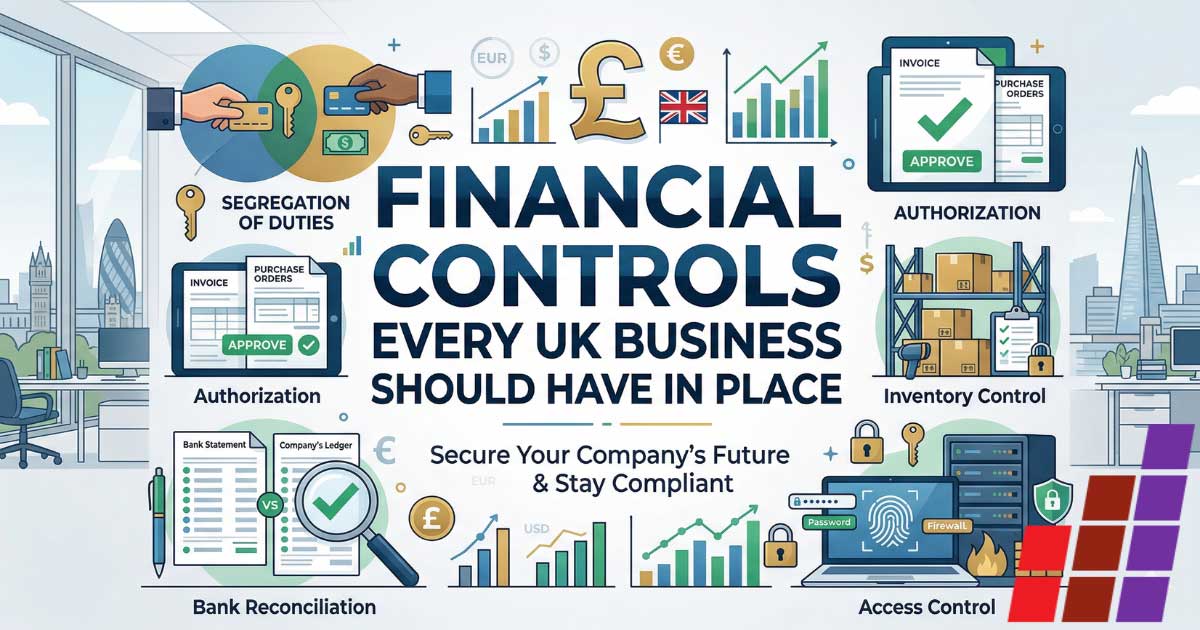
One of the most fundamental financial controls is the segregation of duties. This means that no single individual should be responsible for all aspects of a financial transaction.
For example:
This reduces the risk of fraud and errors, as multiple individuals are involved in the financial process.
Bank reconciliation involves comparing your internal financial records with your bank statements to ensure accuracy.
Benefits include:
UK businesses should perform bank reconciliations at least monthly, though weekly reconciliation is recommended for high-volume transactions.
Cash flow is the lifeblood of any business. Implementing controls around cash flow ensures that your business can meet its financial obligations on time.
Key practices include:
Effective cash flow control helps prevent liquidity issues and supports business continuity.
A well-structured budget is a critical financial control tool. It allows businesses to plan their income and expenditure while setting realistic financial targets.
Forecasting helps you:
Regularly reviewing your budget against actual performance ensures your business stays on track.
Uncontrolled spending can quickly impact profitability. Establishing clear expense approval processes ensures that all expenditures are necessary and authorised.
Best practices include:
This control promotes accountability and reduces unnecessary costs.
Reliable financial reports are essential for decision-making and compliance with HMRC requirements.
Your business should produce:
Regular reporting ensures transparency and helps stakeholders understand the financial health of the business.
Payroll is a sensitive area that requires strict oversight. Errors or mismanagement can lead to compliance issues and employee dissatisfaction.
Effective payroll controls include:
This helps prevent errors, fraud, and regulatory penalties.
Conducting periodic internal audits helps evaluate the effectiveness of your financial controls.
Internal audits can:
Regular reviews allow businesses to adapt and strengthen their control environment over time.
With increasing reliance on digital tools, cybersecurity is now a key component of financial control.
Important measures include:
Protecting financial data is essential to prevent cyber threats and data breaches.
UK businesses must comply with financial regulations set by HMRC and other authorities.
Key compliance areas include:
Failure to comply can result in penalties, fines, and reputational damage.
Implementing and maintaining financial controls can be complex, especially for growing businesses. At Stan Lee Accountancy Ltd, we provide expert support tailored to your business needs.
Our services include:
We help you build a strong financial foundation so you can focus on growing your business with confidence.
Final Thoughts
Strong financial controls are not just a regulatory requirement—they are a strategic necessity. By implementing the right systems and processes, UK businesses can reduce risk, improve efficiency, and achieve long-term success.
If you want to strengthen your financial controls and ensure your business remains compliant and profitable, contact Stan Lee Accountancy Ltd today for professional support.
| Cookie | Duration | Description |
|---|---|---|
| cookielawinfo-checkbox-analytics | 11 months | This cookie is set by GDPR Cookie Consent plugin. The cookie is used to store the user consent for the cookies in the category "Analytics". |
| cookielawinfo-checkbox-functional | 11 months | The cookie is set by GDPR cookie consent to record the user consent for the cookies in the category "Functional". |
| cookielawinfo-checkbox-necessary | 11 months | This cookie is set by GDPR Cookie Consent plugin. The cookies is used to store the user consent for the cookies in the category "Necessary". |
| cookielawinfo-checkbox-others | 11 months | This cookie is set by GDPR Cookie Consent plugin. The cookie is used to store the user consent for the cookies in the category "Other. |
| cookielawinfo-checkbox-performance | 11 months | This cookie is set by GDPR Cookie Consent plugin. The cookie is used to store the user consent for the cookies in the category "Performance". |
| viewed_cookie_policy | 11 months | The cookie is set by the GDPR Cookie Consent plugin and is used to store whether or not user has consented to the use of cookies. It does not store any personal data. |